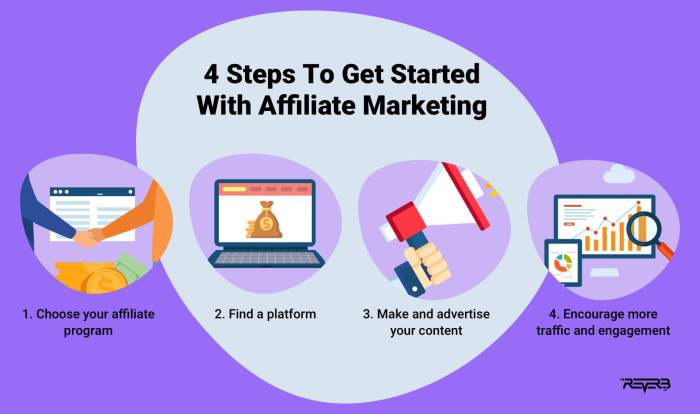
Embarking on the journey of affiliate marketing can seem daunting, but with a strategic approach, it can be a rewarding path to online income. This guide unravels the complexities, offering a practical roadmap to navigate the process from niche selection to profit maximization. We’ll explore proven methods for building a successful online presence, attracting targeted audiences, and ultimately, generating substantial revenue through strategic partnerships.
We will cover essential steps, including identifying profitable niches, selecting reputable affiliate programs, building a compelling website, implementing effective marketing strategies, and diligently tracking your results. We’ll also address crucial legal considerations to ensure your affiliate marketing venture operates within the bounds of the law and ethical best practices. By the end, you’ll possess the knowledge and confidence to launch your own thriving affiliate marketing business.
Building a Website or Online Presence

Creating a strong online presence is crucial for successful affiliate marketing. Your website serves as your central hub, attracting potential customers and driving traffic to your affiliate links. Choosing the right platform and building engaging content are key steps in this process.
Website Platform Comparison
Selecting the right platform for your affiliate website is a significant decision. Different platforms offer varying levels of ease of use, customization options, and cost. Consider your technical skills and long-term goals when making your choice. Below is a comparison of two popular options: WordPress and Shopify.
| Feature | WordPress | Shopify |
|---|---|---|
| Ease of Use | Moderate (requires some technical knowledge, especially for customization) | Easy (user-friendly interface, designed for non-technical users) |
| Customization | High (extensive themes and plugins available) | Moderate (limited customization compared to WordPress, but still offers many options) |
| Pricing | Variable (hosting costs + theme/plugin costs, can range from $10/month to hundreds depending on needs) | Variable (monthly subscription fees, plans start around $30/month) |
| Best Suited For | Blogs, review sites, diverse content websites | E-commerce stores, selling physical or digital products |
Website Setup Process
Setting up your website involves several key steps. Following these steps will ensure a smooth and efficient process.
- Domain Registration: Choose a memorable and relevant domain name (e.g., yourname.com or yourbrand.com). Register your domain through a registrar like GoDaddy or Namecheap.
- Hosting Selection: Select a reliable web hosting provider (e.g., Bluehost, SiteGround, HostGator). Web hosting provides the server space for your website’s files.
- Platform Installation: Install your chosen platform (WordPress or Shopify). Most hosting providers offer one-click installation for WordPress.
- Theme Selection: Choose a theme that suits your website’s design and branding. Many free and paid themes are available.
- Initial Setup: Configure essential website settings, including your website’s name, description, and contact information.
Compelling Website Content Creation
Engaging content is crucial for attracting and retaining visitors. Different content formats cater to various preferences and search engine algorithms. Here are three examples:
- Blog Posts: In-depth articles on relevant topics within your niche. For example, a blog post titled “The Best Travel Backpacks for 2024” could review several backpacks and include affiliate links to purchase them. This approach provides value to the reader while subtly promoting affiliate products.
- Product Reviews: Honest and detailed reviews of specific products. For example, a review of a noise-canceling headphone model could highlight its features, pros, and cons, linking to the product page on Amazon or another retailer.
- Videos: Engaging video content, such as product demos or tutorials. For example, a video demonstrating how to use a specific software tool could attract viewers interested in that tool and increase the likelihood of clicking an affiliate link.
Marketing and Promotion
Driving traffic to your affiliate website is crucial for success. This involves a multi-pronged approach, combining various marketing strategies to reach your target audience effectively and efficiently. The right blend of organic and paid methods can significantly boost your affiliate earnings.Effective strategies for driving traffic are multifaceted and require a tailored approach depending on your niche and target audience.
A well-rounded strategy usually incorporates a mix of organic and paid tactics.
Driving Website Traffic
Several key strategies can effectively drive traffic to your affiliate website. Implementing a combination of these approaches is generally recommended for optimal results.
- Search Engine Optimization (): This involves optimizing your website content and structure to rank higher in search engine results pages (SERPs). This includes research, on-page optimization (title tags, meta descriptions, header tags), and off-page optimization (link building, social media sharing).
- Social Media Marketing: Leveraging social media platforms like Facebook, Instagram, Twitter, Pinterest, and TikTok to engage with your target audience, build brand awareness, and drive traffic to your website. This involves creating engaging content, running contests and giveaways, and utilizing relevant hashtags.
- Paid Advertising: Utilizing platforms like Google Ads and social media advertising to target specific demographics and interests with paid campaigns. This offers immediate visibility but requires a budget and careful campaign management.
- Email Marketing: Building an email list and sending targeted emails to subscribers with valuable content and affiliate links. This fosters a loyal audience and provides a direct channel for promotion.
- Influencer Marketing: Partnering with influencers in your niche to promote your affiliate products or services to their audience. This can be a highly effective strategy, but requires careful selection of influencers who align with your brand and target audience.
Organic vs. Paid Marketing
Understanding the differences between organic and paid marketing is essential for building a sustainable affiliate marketing strategy. Both approaches have their strengths and weaknesses.
| Organic Marketing | Paid Marketing |
|---|---|
| Cost-Effectiveness: Relatively low cost, primarily involving time and effort. | Cost-Effectiveness: Can be expensive, requiring a budget for advertising campaigns. |
| Long-Term Impact: Builds sustainable, long-term traffic through and content marketing. | Long-Term Impact: Provides immediate results but traffic can decline once the campaign ends. Requires consistent investment to maintain results. |
| Timeframe: Results are often slower to materialize, requiring patience and consistency. | Timeframe: Delivers immediate results, allowing for rapid scaling of traffic. |
| Examples: , social media engagement, content marketing, email marketing. | Examples: Google Ads, social media ads, influencer marketing (paid collaborations). |
Sample Social Media Marketing Plan
A successful social media marketing plan requires a strategic approach, focusing on consistent engagement and valuable content.
Platform Selection: Focus on platforms where your target audience is most active. For example, if targeting a younger demographic, TikTok and Instagram might be prioritized. For a more professional audience, LinkedIn might be more effective.
Content Strategy: Create a content calendar outlining the types of posts you will share. This could include:
- Product reviews and comparisons
- Informative blog post excerpts
- Behind-the-scenes glimpses
- Engaging questions and polls
- User-generated content (reposting customer reviews)
Engagement Tactics: Actively engage with your followers by responding to comments, participating in relevant conversations, and running contests or giveaways. Use relevant hashtags such as #affiliatemarketing, #[yourniche], #[productname]. For example, a post about a fitness tracker might use hashtags like #fitness, #fittech, #health, #wellbeing, #[trackerbrand].
Successfully launching an affiliate marketing business requires dedication, strategic planning, and consistent effort. By carefully selecting a profitable niche, building a high-quality website, implementing effective marketing strategies, and consistently monitoring your results, you can steadily grow your online income. Remember that patience and persistence are key to long-term success. This guide has provided a foundation; now it’s time to apply these principles and build your own successful affiliate marketing enterprise.
Frequently Asked Questions
What is the best niche for affiliate marketing?
There’s no single “best” niche. The ideal niche depends on your interests, expertise, and the market demand. Focus on something you’re passionate about and research its profitability.
How much can I earn with affiliate marketing?
Earnings vary greatly depending on factors like niche, traffic, conversion rates, and commission structures. It can range from a few dollars to thousands per month.
Do I need a website to do affiliate marketing?
While a website is highly recommended for building a long-term, scalable business, you can initially promote affiliate products through social media or email marketing.
How long does it take to see results from affiliate marketing?
Results vary widely. It can take several months to build a significant audience and generate substantial income. Consistency and patience are crucial.